If you have been in a conversation about brand consistency recently, you have probably heard both terms: brand guidelines and design system. They are sometimes used interchangeably, especially by people outside the design profession. That is a mistake, and it leads to real problems — organizations that think they have solved their consistency problem when they have only addressed half of it.
Brand guidelines and design systems are related, but they serve different purposes, live in different places, and require different thinking to build well. Here is what each one actually is, where they overlap, and how to know which one your organization needs right now.
What brand guidelines are
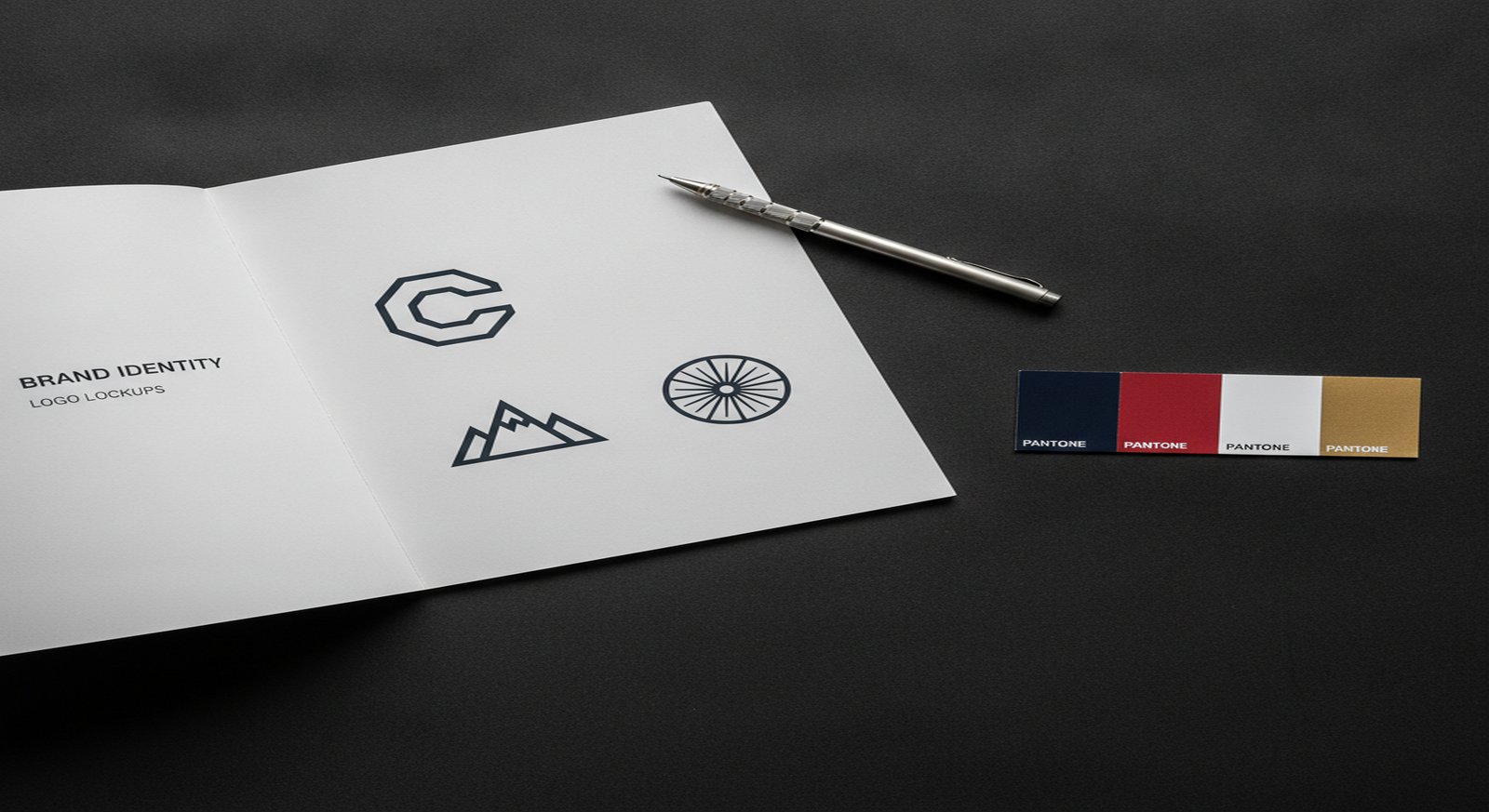
Brand guidelines — sometimes called a brand standards manual or brand identity guide — document the rules of your visual identity. They define your logo and its correct usage, your color palette with precise specifications, your typography hierarchy, your photography style, your tone of voice, and how these elements should be applied across key touchpoints.
Brand guidelines are primarily a reference document. They answer the question: what are the rules? They are essential for onboarding new vendors, briefing agencies, maintaining consistency across a large team, and protecting the equity you have built in your mark and identity.
Most organizations that have done any formal brand work have some version of brand guidelines. The quality varies enormously — from a two-page PDF that covers the logo and nothing else, to a comprehensive document that addresses every scenario from tradeshow signage to social media to co-branding with partners.
Brand guidelines are output-focused. They describe how finished work should look.
What a design system is
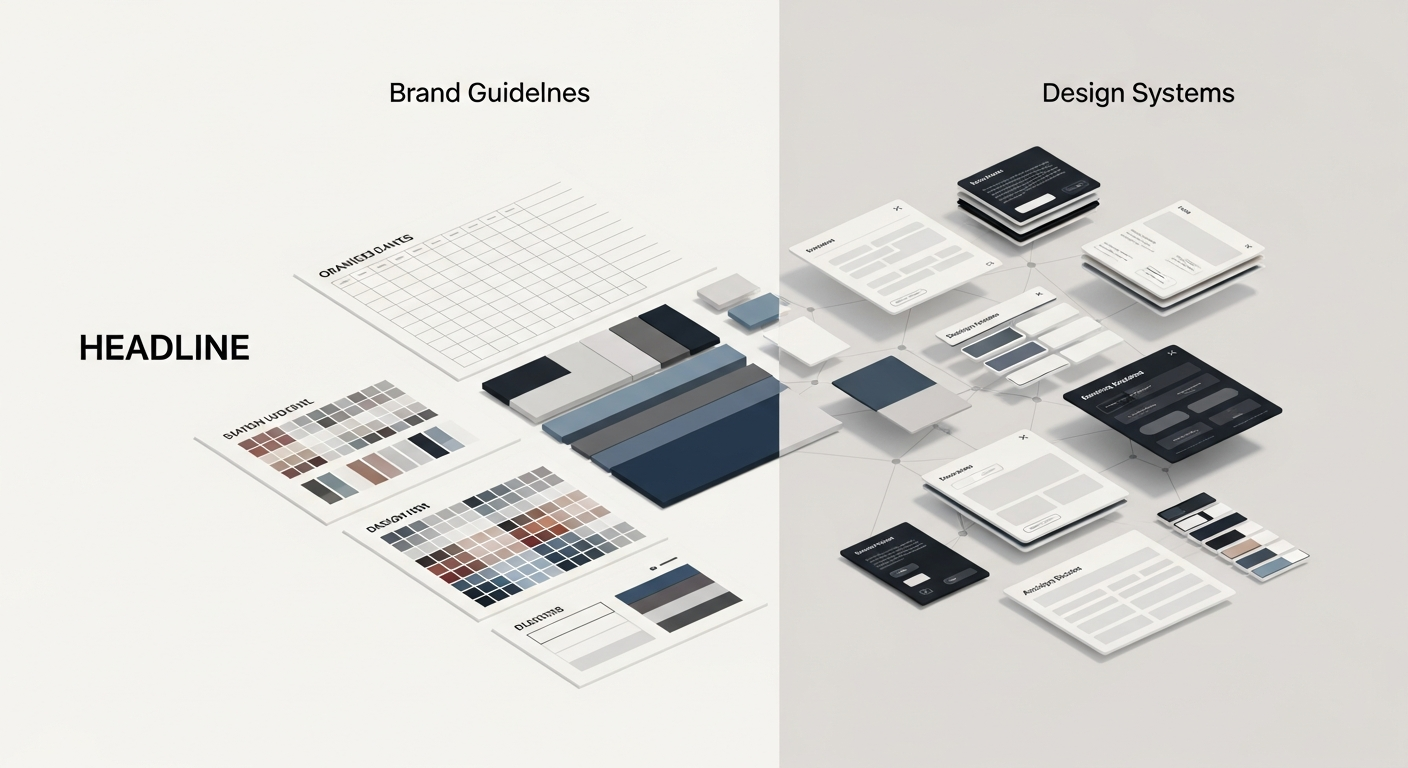
A design system is a set of reusable, interconnected components and standards that enable teams to build consistent digital products and communications at scale. Where brand guidelines describe rules, a design system provides tools.
A mature design system includes a component library — buttons, forms, cards, navigation patterns, typography scales, spacing tokens, color variables — built and documented in the actual tools your team uses. In a digital context, that typically means Figma components that connect directly to front-end code. Changes made in the design system propagate across every product and touchpoint that uses it.
Design systems answer a different question than brand guidelines: not just what should it look like, but how do we build it consistently, every time, at speed?
They are process-focused. They describe how to produce consistent work, not just what consistent work looks like.
Where they overlap
The foundation of a design system is the design token layer — the defined values for color, typography, spacing, and elevation that sit beneath every component. Those values should be derived directly from your brand guidelines. If your brand color is #0070BB, that value should be the source of truth for every digital surface your organization produces.
This is where the two documents intersect: brand guidelines define the identity, and the design system encodes that identity into the production environment. A design system without brand guidelines at its foundation is just a component library. Brand guidelines without a design system are rules that your team has to manually enforce every time they build something new.
The two work best together. But they are still distinct artifacts, built for different audiences and serving different functions.
Why organizations confuse them
The confusion is partly semantic and partly structural. Many organizations have a brand guidelines PDF that includes a section on digital components — button styles, web typography, email templates. That section is not a design system. It is a description of what the design system should produce.
The distinction matters because a description does not scale. As soon as your digital team grows, or you start working with multiple vendors, or your product surface expands, a PDF of rules becomes a game of telephone. The design system is what ensures the rules are actually followed, not just documented.
The other source of confusion is that not every organization needs a full design system. A nonprofit with one website and a small communications team probably does not need a Figma component library with tokenized variables. They need solid brand guidelines and a handful of well-built templates. A professional association managing a member portal, an annual conference, a publication, and a chapter network almost certainly does need a design system — because the complexity of their digital surface has outgrown what manual enforcement can handle.
How to know what your organization needs
Start with these questions. How many people produce branded materials at your organization? How many digital products or surfaces are you maintaining? How often do inconsistencies appear, and how much time does your team spend correcting them?
If your primary problem is that people do not know the rules, you need stronger brand guidelines. If your primary problem is that people know the rules but cannot apply them consistently or efficiently, you need a design system.
In practice, most organizations we work with need both, sequenced correctly. You establish the brand identity and document it in guidelines first. Then, once the foundation is solid, you build the design system on top of it — encoding those guidelines into tools your team actually uses.
The payoff
The organizations that invest in this infrastructure — guidelines that are genuinely comprehensive, a design system that is actually used — see consistent returns. Faster production timelines. Fewer revision cycles. Easier vendor onboarding. Better consistency across channels. And a brand that compounds in recognition over time because every touchpoint is reinforcing the same identity.
That last point is underestimated. Brand recognition is built through repetition, and repetition requires consistency. The infrastructure question — guidelines, system, or both — is ultimately a question about how serious your organization is about building a brand that lasts.
Sutter Group has been building brand identity systems and design systems for organizations in the Maryland, DC, and Virginia market since 1991. If you are trying to figure out where your organization falls on this spectrum, we are happy to talk through it.