Sutter Group
Spatial Computing Design | Apple Vision Pro & Mixed Reality
Spatial computing design and development for organizations ready to explore the next frontier of human-computer interaction.
Sutter Group
Spatial computing design and development for organizations ready to explore the next frontier of human-computer interaction.
Spatial computing is the emerging paradigm in which digital content exists in three-dimensional space rather than on flat screens. The Apple Vision Pro, Meta Quest, and Microsoft HoloLens represent the leading edge of this transition, but spatial computing extends beyond any single device to encompass the full design challenge of creating digital experiences that live in, respond to, and enhance physical environments. As spatial platforms mature and adoption grows, organizations that develop spatial computing design capability now will hold a significant advantage over those that wait.
Sutter Group designs spatial computing experiences for organizations in the DC, Maryland, and Virginia region that are building toward this transition. We bring spatial UX design expertise, 3D content development capability, and deep experience with the leading spatial platforms to projects at every stage of organizational maturity with immersive technology.
Designing for spatial computing requires unlearning the conventions of screen-based interface design. There is no flat canvas with fixed dimensions. Content exists in three-dimensional space and must be legible, interactive, and comfortable for users who are looking in any direction, at varying distances, and moving through real environments. We approach spatial UX with design principles specific to this context: gaze, gesture, and voice as primary input modalities; spatial audio as a navigational and informational layer; and content hierarchies that work in three dimensions rather than two.
Apple Vision Pro’s introduction of visionOS has created the most significant new platform design challenge since the original iPhone. Applications designed for Vision Pro must rethink interface conventions that have been standard on screens for decades, adapting to a device where the physical environment is always present and the user’s gaze is the primary pointing device. We design visionOS applications that feel native to the platform, taking advantage of its unique capabilities rather than simply replicating 2D interfaces in three dimensions.
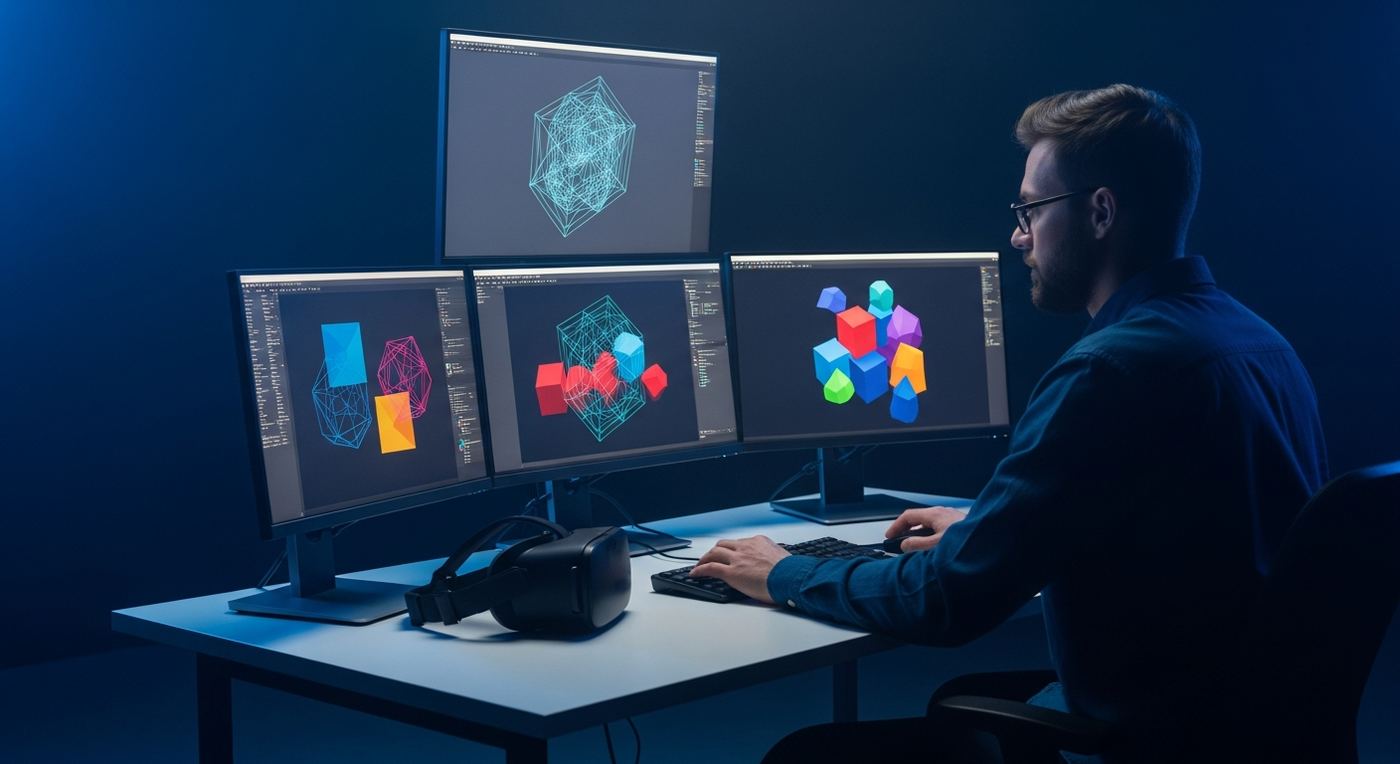
Spatial computing experiences require 3D content assets that perform well at real-world scale, in real lighting conditions, and across the full range of physical environments where users will encounter them. We develop spatial content including 3D models, spatial audio, volumetric video, and the interactive behaviors that make static 3D assets into responsive experiences. Asset optimization for spatial platforms requires different techniques than those used for traditional 3D rendering, and we bring the specific expertise that spatial content production demands.
Enterprise applications represent the near-term highest-value opportunity in spatial computing. Remote collaboration tools that place distributed team members in shared spatial environments, data visualization experiences that make complex operational data legible at the scale of real environments, and training simulations that blend real equipment with spatial guidance overlays are all enterprise applications with clear ROI today. For DC-area organizations in defense, healthcare, professional services, and government contracting, enterprise spatial applications are a practical investment, not a speculative one.
Organizations building multiple spatial applications or planning a long-term spatial computing roadmap need design systems that ensure consistency across experiences, reduce production time for new applications, and establish the design language that will define their spatial brand presence. We develop spatial design systems including component libraries for common interaction patterns, spatial typography and color standards, audio design guidelines, and the documentation that allows development teams to build new spatial experiences within an established design framework.
For organizations at the beginning of their spatial computing exploration, a focused prototype on a specific use case provides the concrete evidence needed to evaluate platform choices, estimate production costs, and make the internal case for broader investment. We develop spatial computing prototypes that answer specific questions about feasibility, user response, and business value, giving organizational decision-makers the hands-on experience with the technology that changes the nature of the investment conversation.
Washington DC’s concentration of defense contractors, federal agencies, research institutions, and technology-forward professional services firms makes it one of the most active early markets for enterprise spatial computing in the country. Organizations in this region are already using spatial computing for classified training applications, public-facing engagement experiences, and internal collaboration tools. The market for spatial computing design capability in this region is growing faster than the supply of practitioners who understand both the technology and the institutional context where it will be deployed.
Contact us to discuss spatial computing design for your organization.
From Our Practice
Spatial computing is redefining how organizations communicate and train. Explore our Virtual & Augmented Reality service for the full immersive scope, or see eLearning Design & Development for how spatial computing applies to training and learning programs. Read Creative Intelligence: The Strategic Edge Most Brands Are Missing for our perspective on how emerging creative technology builds strategic advantage.
From Our Insights
Let's Talk
Tell us about your project. We respond within 24 hours.