In federal contracting, the written proposal is still the centerpiece of most pursuits. But the firms winning consistently are increasingly using video as a supporting tool – for capability briefs, past performance storytelling, and BD conversations that happen long before an RFP drops.
Video does not replace a strong technical approach or a competitive price. What it does is solve a problem that written documents cannot: it makes your firm memorable, credible, and easy to understand in a crowded market where every competitor’s capabilities statement sounds similar.
The Problem with Text-Heavy BD Materials
Government contractors default to documents. Capabilities statements, white papers, one-pagers – all text, all dense, all requiring the reader to do the work of understanding who you are and what you can do.
For a contracting officer or program manager reviewing dozens of vendor submissions, a wall of text creates friction. The firms that remove that friction by presenting information clearly and efficiently have a real advantage.
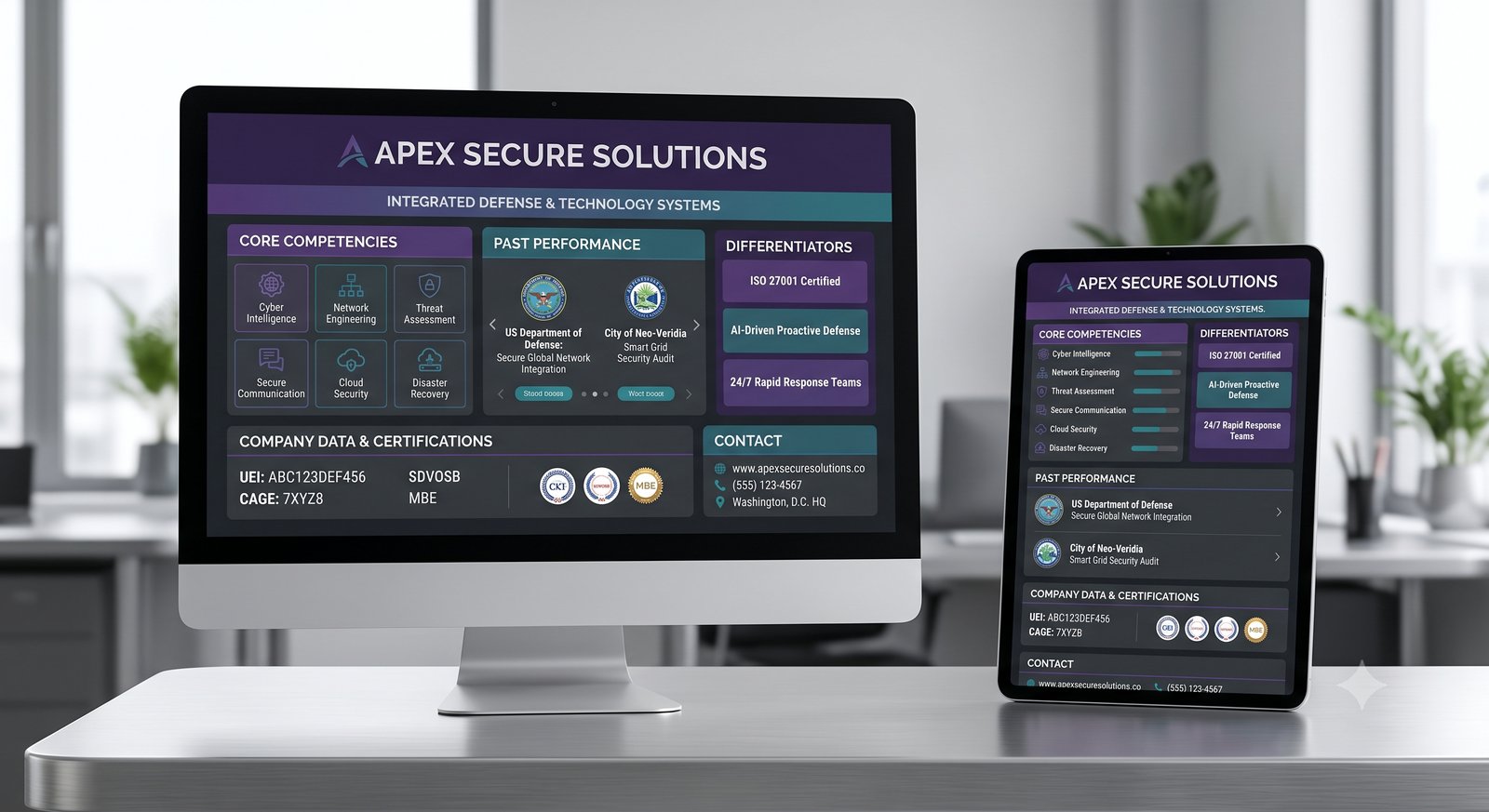
Video reduces the cognitive load on your audience. A two-minute government contractor video capability brief communicates your differentiators faster and more memorably than a four-page document covering the same ground. That matters when your audience has limited time and multiple options.
Capability Briefs: Your Firm on Video
The capability brief is the most direct application of video for government contractors. It is a short, produced overview of who you are, what you do, and what kinds of work you are best suited for.
An effective capability brief runs two to three minutes and covers a few specific things: your core competencies, your relevant experience, your differentiators from similar firms, and a clear statement of the kinds of contracts you pursue. It should feel authoritative without being stiff, and specific enough that a viewer understands exactly what category of work you do.
Where capability briefs get used: government contracting portals, GSA Schedule profiles, small business program pages, email introductions to new agency contacts, and one-on-one meetings with contracting officers or large prime partners. A well-produced brief works in all of those contexts without modification.
Past Performance Video: Making Your Experience Real
Past performance is one of the most evaluated factors in federal source selections, and it is also one of the hardest things to communicate memorably in text. Every contractor submitting a proposal claims relevant experience. A video that shows the work rather than describes it creates a different kind of impression.
Past performance video works best when it follows a simple structure: the challenge the agency or prime faced, the specific role your firm played, and the measurable outcome. Keep it concrete. Vague claims about “delivering results” or “supporting mission objectives” are as forgettable on video as they are on paper.
For firms pursuing set-aside contracts – 8(a), HUBZone, SDVOSB, WOSB – past performance video is a particularly strong tool. These programs exist to give smaller firms a path to prime contracts, but the firms evaluating you still need confidence in your ability to perform. A short video showing a completed project tells that story more effectively than a reference letter.
Teaming and Partnership Introductions
Large prime contractors evaluating potential subcontractors or teaming partners are making a judgment about fit and capability, often quickly and with limited information. A capability brief or project highlight video makes that evaluation easier.
When a prime is assessing whether to bring your firm onto a team, they are looking for clarity: Do you understand the work? Do you have relevant experience? Are you organized and professional? A well-produced short video answers all three questions faster than a meeting or a document exchange.
For firms actively building their teaming pipeline – whether pursuing prime opportunities or positioning themselves as preferred subs – motion and video production is a low-friction way to make a strong first impression with firms you have never worked with before.
Proposal Support: Video as a Leave-Behind
Some solicitations allow or encourage supplemental materials beyond the written proposal. In those cases, a short video summary of your technical approach or past performance can be an effective differentiator.
Even where formal submission rules do not allow video attachments, the post-submission period often includes oral presentations, Q&A sessions, or pre-award discussions where video content can reinforce your written proposal. A capability brief shown during an oral presentation keeps evaluators oriented and signals organizational polish.
Internal and Program Support
Beyond BD, video has operational value for government contractors. Program kickoff videos for new contracts help agency stakeholders understand your team and approach from day one. Recruitment videos support hiring in a competitive market for cleared professionals. Training content, particularly for compliance-heavy roles, is more effective and more consistent in video format than in written procedures.
These applications do not win contracts directly, but they reflect the overall sophistication of your organization – which influences how clients, partners, and recruits perceive you over time. The same discipline that goes into a strong content strategy applies here: the right message, in the right format, for the right audience.
Production Quality Matters More Than You Think
There is a tendency among government contractors to view video as an optional marketing expense and to approach it accordingly – low budget, minimal production, internal talent doing the filming. The result is content that signals exactly the opposite of what you want: that your firm does not invest in quality or presentation.
For federal contractors, your BD materials are a direct signal of how you will perform on contract. A poorly produced video works against you. A clean, well-produced piece suggests a firm that brings that same discipline to its contract work.
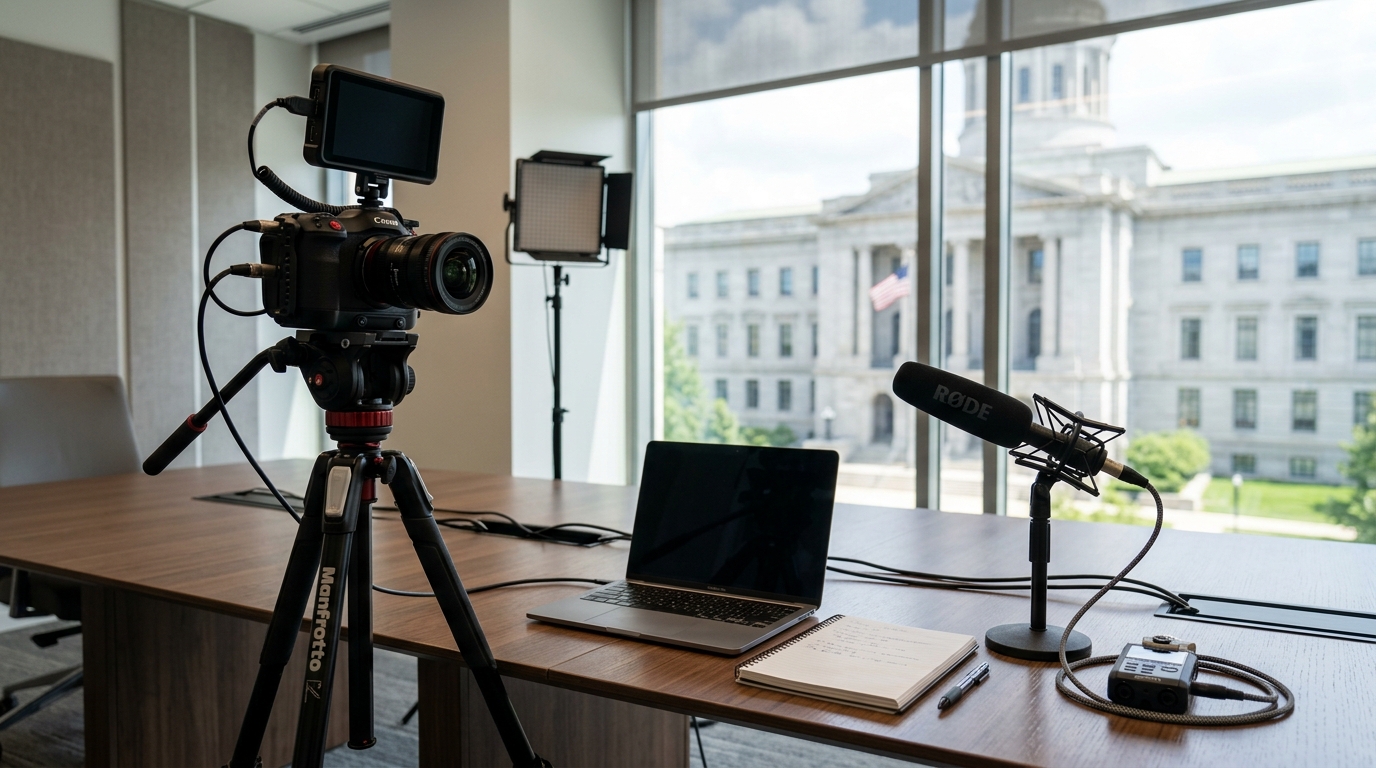
Production quality does not require a large budget. A focused two-minute video with good lighting, clear audio, and professional editing communicates competence. What it requires is working with a production partner who understands how to tell a concise, credible story rather than filling minutes with footage.
Getting Started
The most common barrier government contractors face with video is not budget – it is not knowing where to start. The practical path is to begin with the one thing you use most in BD conversations: your capability brief. Build a two-minute version that you can use across every channel where you introduce your firm. From there, add a past performance piece for your strongest, most relevant project.
Those two assets cover most BD use cases and give you a foundation to build on as you pursue larger opportunities.
Sutter Group produces motion and video content for government contractors and the agencies they serve. If you are ready to put your firm on camera, let’s talk about what you need.