Your association has a mission statement, a set of core values, and probably a logo that has been around longer than you would care to admit. But here is the uncomfortable question most association leaders never ask: What does your brand actually communicate to the people you are trying to reach?
Brand and identity are not the same thing. Your logo is not your brand. Your colors are not your brand. Your brand is what people feel and believe about your organization, shaped every time someone encounters you: on your website, a conference badge, an email newsletter, or a sponsored post on LinkedIn. And often, that feeling does not match the intention.
The Gap Most Associations Do Not See
Every organization has a gap between what it intends to communicate and what it actually communicates. For associations, this gap tends to be especially wide.
Association identities often evolve by committee and accumulate over time rather than being designed with intention. A logo gets updated here. A color gets added there. A new subcommittee launches its own visual language. Over ten or fifteen years, the result is a brand that looks less like a coherent brand identity and more like a record of decisions made by different people at different moments.
Associations also speak to multiple audiences: current members, prospective members, sponsors, policymakers, and the general public. Each audience has different expectations, and without a clear brand strategy, it is easy to send mixed signals to all of them.
What Your Brand May Be Saying Without Knowing It
Here are some of the messages association brands send unintentionally.
We have not changed since 2003. An outdated visual identity does not just look old. It communicates stagnation, even if your programs and advocacy work are genuinely cutting-edge.
We are not sure who we are for. Generic language and stock photography signal that you have not thought carefully about your audience. The people you are trying to reach will feel that immediately.
We are smaller than we are. Production quality matters. A poorly designed annual report or a website that loads slowly and looks dated undercuts the scale and credibility of your work, regardless of how significant that work actually is.
We are trying too hard. On the other end of the spectrum, an identity that feels forced or overly trendy can come across as inauthentic. That is particularly damaging for organizations whose value proposition is trust and expertise.
How to Diagnose a Brand Disconnect
A brand audit does not require a full agency engagement. These four questions will give your leadership team a quick read on where you stand.
Does your brand look like what your organization actually is? Print out your most recent annual report cover, your most recent conference materials, and your website homepage. Put them side by side. Do they feel like they come from the same organization? Do they reflect the quality, scale, and sophistication of your work?
Does your brand speak to the right people? Review your homepage copy. If a prospective member or sponsor landed on your website with no prior knowledge of your organization, would they immediately understand who you serve and why it matters?
How does your brand compare to your peers? Map your visual identity against four or five comparable organizations. Where do you fall on the spectrum from polished to dated, from specific to generic, from authoritative to approachable? Is that where you want to be?
What does your brand feel like to experience? Think about the last time you received a piece of communication from your own organization as if you were seeing it as a member for the first time. Was it something you would be proud to put in front of a major sponsor?
Refresh vs. Redesign: Knowing Which One You Need
Not every brand problem requires a full rebrand. Understanding the difference between a brand refresh and a redesign saves significant time and budget.
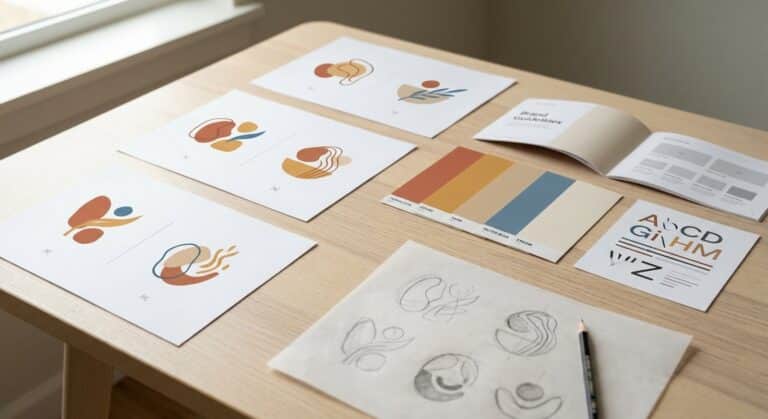
A refresh makes sense when the core brand architecture is sound but the execution has drifted. Maybe the logo is strong but the color palette has become inconsistent across vendors. Maybe the typography has gotten muddy over time. A refresh tightens, clarifies, and modernizes without starting over.
A redesign makes sense when the brand itself is misaligned with the organization’s current direction. If your association has significantly expanded its scope, merged with another organization, or undergone a strategic repositioning, a refresh will not be enough. You need a new foundation.
The clearest signal that you need a redesign rather than a refresh: people consistently misunderstand what your organization does or who it serves. That is not a visual problem. That is a strategy problem, and it requires a strategy solution.
What to Look for in a Creative Partner
The most important thing to look for in a creative partner is experience with your type of organization. Working with associations is genuinely different from working with corporations or consumer brands. The stakeholder dynamics are different. The approval processes are different. The audiences are different. A partner who understands those dynamics will save you months of misaligned expectations.
Beyond that, look for strategic depth. The best creative partners do not simply execute your brief. They help you develop it. They ask questions about your audience, your competitive landscape, and your organizational goals before they open a design file.
And look for a portfolio that demonstrates longevity. A partner who has been building and refreshing association brand identities for years has the institutional knowledge to help you build something that will serve your organization for the next decade, not just until the next board retreat.
Your Brand Is Always Communicating Something
The only question is whether you are in control of the message.
A thoughtful brand audit, followed by a clear-eyed decision about whether you need a refresh or a full redesign, is one of the highest-leverage investments an association can make. It does not just improve how you look. It improves how you are understood, how you attract members and sponsors, and how your organization is positioned to grow.
If you are not sure where your brand stands, that uncertainty is itself a signal worth paying attention to. We are glad to help you find out.