Government contracting runs on credibility. Before a contracting officer, a prime’s capture team, or an agency stakeholder ever speaks with you, they have already formed an impression from your website, your capability statement, and the way you show up at a trade show. These days they have probably also asked an AI assistant who you are. For a govcon firm, branding and video do real work. They tell a buyer whether you can be trusted with the mission, and they do it before anyone opens your proposal.
Most agencies do not understand this world. They design for consumer brands or software startups, then treat a defense contractor like any other client. The work comes back generic, and sometimes tone deaf. This guide covers what makes government-contractor branding different, where video actually earns its keep, and how to pick a partner who understands the constraints you work under.
Why government-contractor branding is different
Your audience is a small group of highly informed people: contracting officers, program managers, primes sizing up teaming partners, and agency technical staff. They are cautious by job description. They want to see stability, past performance, and command of the mission. Novelty makes them nervous.
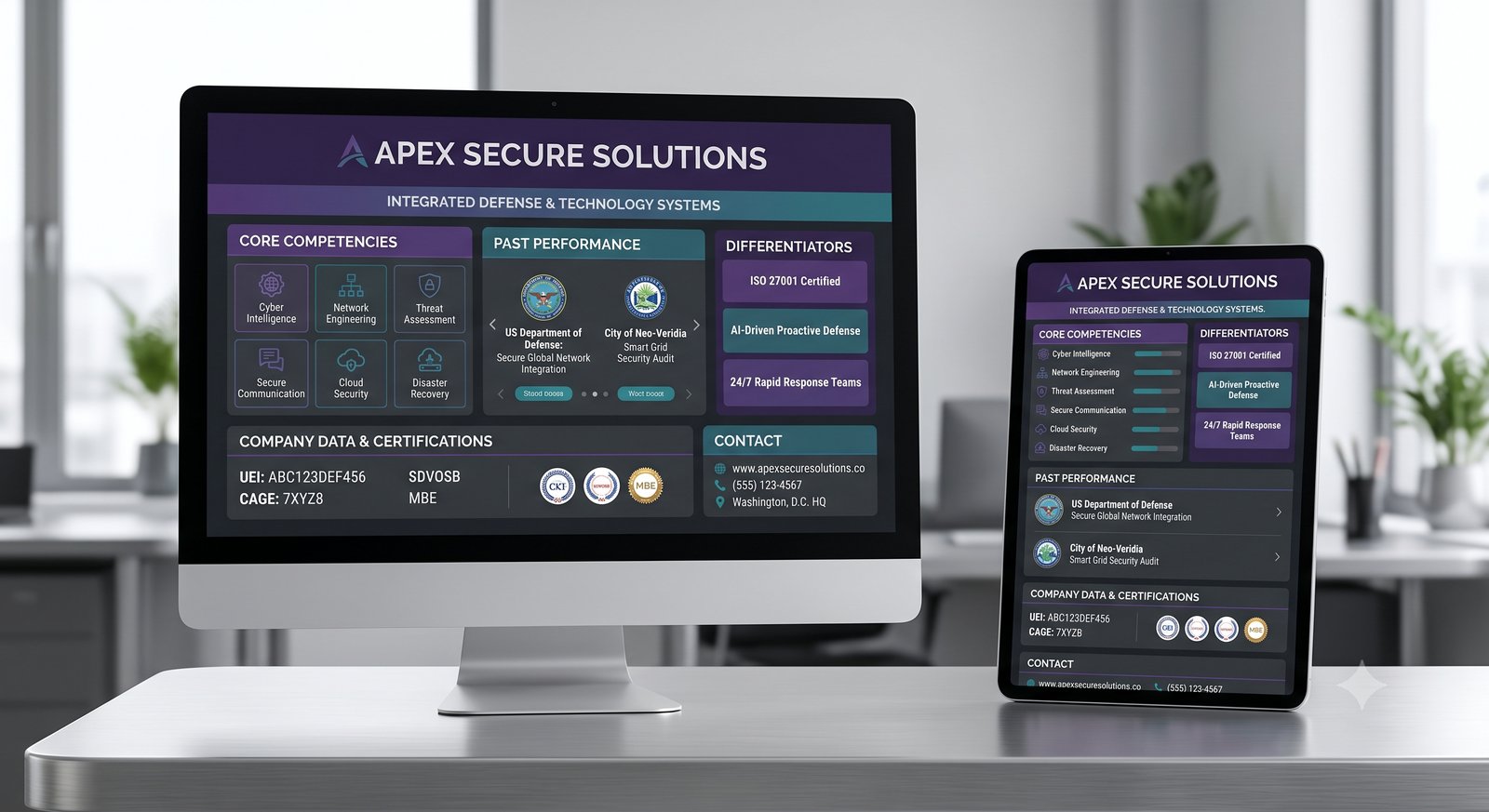
So the design brief changes. Color, type, and voice have to read as serious and precise. What sells the firm is evidence: contract vehicles, certifications, cleared staff, past performance, the specific problems you solve. A clever tagline does nothing for a contracting officer. The piece that carries most of this weight is your capability statement, and it has to be current, easy to scan, and consistent with everything else a buyer sees.
Consistency matters more here than in almost any other sector. A proposal, a SAM.gov profile, a GSA schedule listing, a LinkedIn page, and a booth graphic should all look like they come from the same organization. Fragmented branding reads as a fragmented company, and that is the last signal you want to send an evaluator.
Where video earns its keep, and the OPSEC reality
Video is powerful in govcon, but only certain kinds. The formats that consistently pull their weight:
- Capability videos that explain, in plain terms, what you do and why it matters to a mission.
- Past-performance and mission videos that make an abstract contract feel real.
- Trade-show content for events like Sea-Air-Space, AUSA, SOF Week, and AUVSI, where a strong reel earns attention on a crowded floor.
- Recruiting video, because cleared talent is as competitive as any contract.
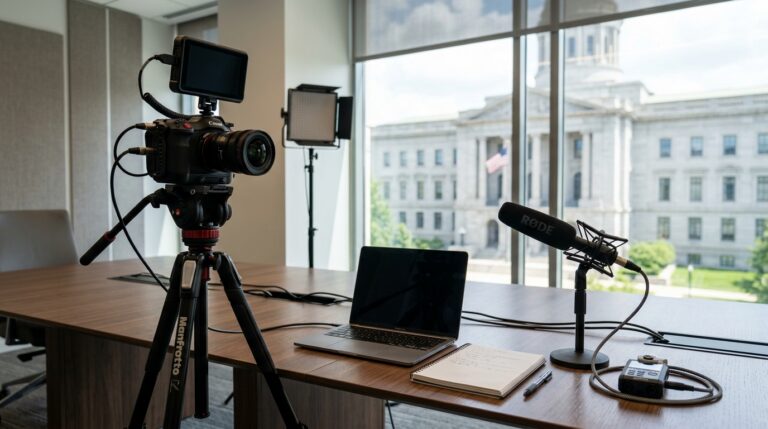
Then there is security, which is where vendors from outside this world get into trouble. Someone who has never done govcon work will happily point a camera at something they should not. You need a partner who understands OPSEC, who asks about ITAR and EAR before a shoot, who knows that some facilities and people cannot appear on camera, and who builds a security review into the process instead of bolting it on at the end. A lot of the best govcon video works by showing less on purpose.
What to look for in a branding and video partner
When you evaluate an agency, look past the portfolio gloss and ask:
- Do they have real experience with defense, intelligence, or federal clients, and can they discuss the constraints without you explaining them first?
- Can they translate technical and mission language into something a non-specialist stakeholder understands, without dumbing it down?
- Do they treat security and compliance as a first-order concern, or as a box they check once the work is done?
- Can they move on a proposal timeline, when a deadline is fixed and immovable?
- Do they handle the full system, from strategy and brand to the capability statement, the site, and the trade-show presence, so it all holds together?
- Do they lead the strategy and design themselves and manage trusted production partners, so you get senior attention and one accountable point of delivery?
That last one matters most. The strongest partners own the strategy, the brand, and the account relationship, and pull in specialist production when the work calls for it. You want one firm on the hook for the whole result. A body shop hands you files and leaves the seams for you to sort out.
Common mistakes that cost govcon firms
- Treating the capability statement as a formality instead of a designed, current sales tool.
- Letting each proposal team rebuild collateral from scratch, so nothing matches.
- Hiring a consumer agency that produces beautiful work that misreads the audience.
- Producing video with no security review, then not being able to use it.
- Ignoring digital discovery because “our buyers already know us.” The next program office might not.
In 2026, buyers and AI research you first
The biggest shift is who takes the first look. Program staff and teaming partners research you online before any conversation, and plenty of them now ask an AI assistant to sum up who you are and who you compete with. If your site, your capability statement, and your public profile are thin or contradictory, that is the story the AI repeats back. Your brand shows up inside the answer now, before you get to present a single slide. That turns getting it right into a way to get found, which is a newer reason to care than most contractors expect.
How Sutter Group approaches it. We work with defense and national-security organizations. We lead the brand strategy, the design, and the account relationship, and coordinate a trusted network of production specialists, so the whole system holds together from capability statement to trade-show reel. We understand the security constraints and the proposal clock, and we build both into the plan from the start.
Rethinking how your firm shows up?
If you are a government contractor rebuilding your brand, your capability materials, or your trade-show presence, we should talk.
Frequently asked questions
What is the most important branding asset for a government contractor?
Usually the capability statement. It is the piece most likely to reach a contracting officer or a prime, so it has to be current, easy to scan, and visually consistent with your site and proposals. A dated or generic capability statement undercuts everything else.
How is govcon branding different from commercial branding?
The audience is a small group of informed, risk-averse evaluators rather than a broad consumer market. Your brand has to read as credible and proven, and it has to stay consistent everywhere a buyer checks: proposals, SAM.gov, GSA listings, and trade-show materials.
Can an agency produce video at a secure or sensitive facility?
Only with the right process. A capable partner asks about OPSEC, ITAR, and EAR before a shoot, plans around facilities and personnel that cannot appear on camera, and builds a security review into production. The goal is footage you can actually use, which often means deliberately showing less.
Does branding really affect winning contracts?
It shapes the impression you make before evaluation and during teaming decisions. Branding does not score a proposal on its own. A credible, consistent presence makes primes and program staff more comfortable bringing you in, and a shaky one plants doubt.
Should a small government contractor invest in video at all?
If you exhibit at trade shows, recruit cleared talent, or need to explain a complex capability quickly, yes. Start with one strong capability video you can reuse across your site, events, and outreach, rather than many one-off pieces.