Member education has always been a core function of associations. Conferences, seminars, certification prep courses, and compliance training are often the most tangible benefit a member can point to when explaining why they belong. But the delivery model that worked for decades is under pressure.
Members expect more flexibility. They want access to professional development on their schedule, not at a fixed time in a fixed location. They want content they can return to. And increasingly, they want learning that fits their specific role rather than a general session designed for the broadest possible audience.
Associations that have moved their education programs online are finding that the shift does more than meet expectations. It opens revenue streams that were not available before, improves retention rates, and gives the association a measurable product to point to when making the case for membership.
What Online Member Education Actually Looks Like
The term eLearning covers a wide range of delivery formats, and the right approach depends on the type of content and the audience.
For professional certification and continuing education requirements, SCORM-compliant modules delivered through a learning management system (LMS) are the standard. Members complete the course, pass an assessment, and receive a certificate their employer can verify. The association tracks completions, generates compliance reports, and has documentation that the education program is being used.
For onboarding and orientation content, short-form video and microlearning work well: focused modules of five to ten minutes that cover a single concept and can be completed without a significant time commitment. This format is particularly effective for new members who are still building familiarity with the association and its resources.
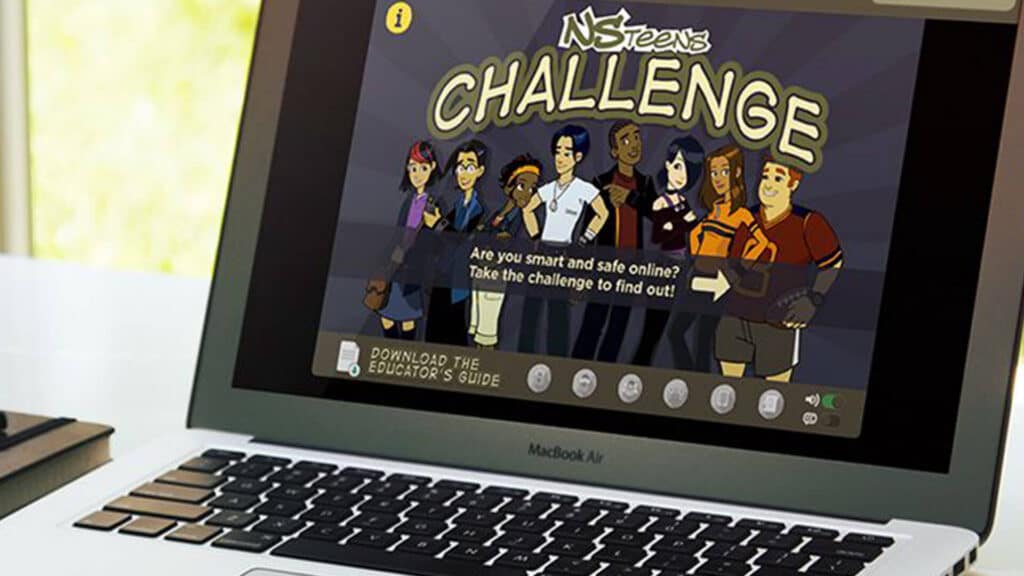
For high-stakes skill development, particularly in technical or regulated fields, interactive branching scenarios give learners the opportunity to practice decision-making in a simulated environment before applying those skills in the field. The National Center for Missing and Exploited Children used this approach for their NSTeens internet safety program, developing an interactive game that walked users through five critical online safety scenarios, each requiring active choices rather than passive consumption.
The format follows the content. A compliance certification and an onboarding orientation call for different approaches, and the best eLearning programs treat them accordingly.
Why This Matters for Retention
The associations with the strongest retention numbers tend to have one thing in common: members who can point to something specific they received from the organization in the past year. A conference they attended, a certification they completed, a resource they returned to repeatedly.
Online education strengthens this dynamic in a way that traditional conference-based programming cannot. A member who completes a certification through the association’s LMS has a record of that completion. Their employer may recognize it. They can list it on a resume or professional profile. The association is attached to a professional credential that has real value outside the membership directory.
This is distinct from access to a member forum or a discount program. Those benefits are passive. They exist whether the member uses them or not. An eLearning completion is active proof of engagement, and it creates a much stronger case for renewal.
Non-renewal is often not about dissatisfaction. It is about forgetting. Members who cannot point to something concrete they received from the association in the past year have nothing to weigh against the renewal invoice. Online education gives them something to point to, and it gives the association’s membership team something to reference in renewal conversations.
The Non-Dues Revenue Angle
Member dues fund a lot of what associations do, but they are rarely sufficient on their own. Most associations have some form of non-dues revenue strategy: sponsorships, advertising, publications, event fees. Online education fits into this structure naturally.
The most straightforward model is paid course access: members receive a discount on courses that are also available to non-members at a higher price. This keeps the membership value proposition clear while opening the content to a broader audience.
A tiered access model works well for associations with active continuing education requirements in their field. Basic courses are available to all members as part of dues. Advanced certification tracks or specialized courses carry an additional fee. Members who are serious about professional development spend more, and the association earns revenue from the segment most invested in what the association offers.
Some associations have built out full digital academies: branded learning portals with structured curricula, cohort-based programs, and instructor-led components delivered via video. These programs compete directly with continuing education providers outside the association and win on the strength of the association’s credibility in the field.
The investment in production quality matters here. An eLearning program that feels like a converted PowerPoint will not command a premium price. A well-designed, properly interactive course with a professional visual environment will.
What a Good eLearning Build Requires
The most common mistake associations make when launching an eLearning program is treating it as a content problem rather than a design problem. The assumption is that if the subject matter expertise exists within the staff or membership, the course can be built quickly by converting existing materials into a digital format.
This approach produces content that members complete once because they have to and never return to. It does not produce programs that drive engagement, retention, or revenue.
A well-built eLearning program starts with learning objectives, not content. What does the learner need to be able to do at the end of this course? What knowledge or behavior change defines success? The answers to those questions drive every decision that follows: the content structure, the interaction model, the assessment design, and the visual environment.
Instructional design is a discipline in its own right. It is different from subject matter expertise and different from graphic design. The associations with the strongest eLearning programs treat these as distinct roles and staff them accordingly, either internally or through a development partner.
The technical side requires the same level of care. SCORM compliance, LMS integration, mobile responsiveness, and accessibility standards are not optional if the goal is a professional-grade program. A course that breaks on mobile or fails to report completions accurately to the LMS undermines the entire program.
Getting Started
Most association eLearning programs begin with a single course in the area of highest existing demand. If members consistently ask for continuing education credit in a specific topic area, or if the association runs a high-attendance seminar that could translate to an online format, that is usually the right starting point.
The goal of the first course is not to cover everything. It is to build a foundation: an LMS environment, a production process, and a template that can support additional courses as the program grows. The infrastructure investment happens once. Subsequent courses build on it.
Associations that have gone through this process describe the same experience: the first course takes longer and costs more than expected, and every course after it is faster and cheaper because the foundation exists.
The associations that wait for the perfect content strategy before building anything never launch. The ones that build something specific, learn from it, and expand from there end up with programs their members actually use.
If your association is ready to move member education online, contact us to talk through where to start and what a first course might look like.