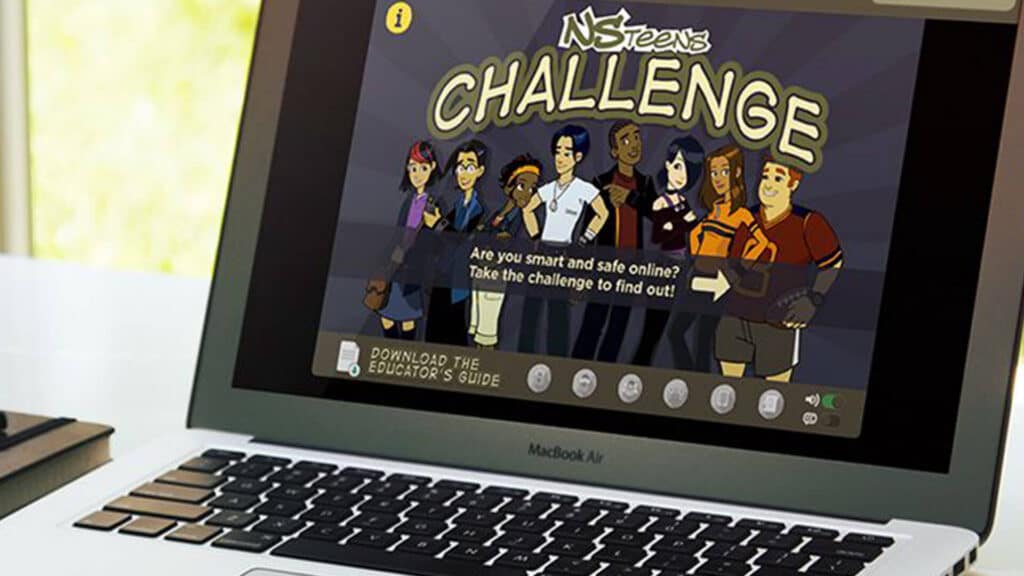
Government contractors face a training challenge that most commercial organizations do not. Requirements come from multiple directions: federal compliance standards, contract-specific mandates, security clearance protocols, and the operational needs of a workforce that may be distributed across multiple sites, cleared facilities, and remote locations. The traditional answer has been instructor-led training, printed manuals, and PowerPoint decks delivered in conference rooms.
That model works until it does not. And for most contractors operating at scale, it stopped working a while ago.
The Real Cost of Instructor-Led Training
The direct costs of instructor-led training are visible: facilitator time, travel, facilities, and lost productivity when employees are pulled from work. But the indirect costs are where the budget damage really accumulates.
Consistency is the first problem. When training depends on individual instructors, delivery quality varies. A three-day onboarding that runs sixteen times across four sites will not be the same experience for every employee. For contractors where consistent compliance documentation matters, inconsistent delivery creates real liability.
Documentation is the second problem. Proving that a specific employee completed a specific training by a specific date is straightforward in a learning management system. It is considerably harder when training happens in a conference room with a sign-in sheet.
Scaling is the third problem. Contractor workforces can grow rapidly when a new contract is awarded. Onboarding fifty new employees in sixty days using an instructor-led model requires either multiple concurrent sessions or a bottleneck that delays productive work. A well-built eLearning course scales to any number of concurrent learners with no additional delivery cost.
What Custom eLearning Actually Solves
Custom eLearning development is not about converting PowerPoint slides to a web format. That approach produces exactly the kind of passive, click-through compliance training that employees skip through and forget. Effective eLearning development starts with the same question any good training design starts with: what does the learner need to be able to do differently after this course?
For government contractors, the answer often involves specific regulatory frameworks, controlled information handling procedures, security awareness, contract performance standards, or technical operational skills. Each of those has different design implications.
Security awareness training benefits from scenario-based design: realistic situations where the learner has to make decisions and see the consequences. That design pattern produces measurably better retention than a narrated slide deck covering the same content. SCORM or xAPI delivery through an LMS means every completion is logged and reportable.
Technical procedures benefit from interactive walkthroughs where the learner practices the process in a simulated environment rather than reading about it. That is the difference between a course that employees complete and a course that changes behavior.
SCORM, xAPI, and What Compliance Reporting Actually Requires
Most contractors with an existing LMS are already familiar with SCORM, the long-standing standard for eLearning content packaging and reporting. SCORM courses communicate completion, score, and time-spent data back to the LMS. For most compliance training requirements, that is sufficient.
xAPI (also called Tin Can) goes further, capturing a wider range of learning activity data in a format that does not require a traditional LMS. xAPI is worth considering when training happens outside of formal course contexts, when you need to track performance on the job rather than just course completion, or when your reporting requirements are complex enough that SCORM’s limited data set is not sufficient.
For most government contractors building out a compliance training library, SCORM delivered through a GSA-approved or contract-compliant LMS is the practical starting point. The more important question is whether the LMS and the course delivery architecture meet any contract-specific requirements for records retention and audit access.
Common Contractor Use Cases
Security and compliance training is the most common starting point. OPSEC, cybersecurity awareness, ethics and standards of conduct, and onboarding compliance are all well-suited to eLearning delivery because the content is stable, the audience is large, and documentation requirements are clear.
Technical skills development is the second major category. Contractors supporting DoD or civilian agency programs often need to train staff on proprietary systems, internal procedures, or contract-specific workflows. Custom eLearning can codify that institutional knowledge in a format that scales to new hires and refreshes existing staff consistently.
Leadership and professional development is less common but growing. Contractors competing for CMMI certification, participating in 8(a) development programs, or building out a professional services practice increasingly use eLearning to support structured development programs that used to require in-person cohorts.
The Build vs. Buy Question
Off-the-shelf eLearning libraries exist for many generic compliance topics: cybersecurity awareness, workplace safety, and basic HR compliance. For content that is not specific to your organization or contract, purchasing a content subscription can be the right call.
Custom development makes more sense when the content is specific to your organization, your contract, your procedures, or your workforce. If the training needs to reflect your actual terminology, document references, system interfaces, and operational context, generic content will underdeliver. Learners recognize when training was not built for them, and that recognition erodes engagement and retention.
The hybrid approach often works well: license off-the-shelf content for generic regulatory topics and invest in custom development for the high-stakes, organization-specific content where consistency and documentation matter most.
What to Look for in an eLearning Development Partner
Government contractors evaluating eLearning development partners should look for a few specific things beyond portfolio quality. Experience with the content standards your LMS requires (SCORM 1.2, SCORM 2004, xAPI) is table stakes. So is familiarity with the compliance and procedural content that contractors actually need.
The more important signal is the development process. A firm that leads with design questions before production questions is more likely to produce training that works. What are learners expected to be able to do after this course? How will you measure whether they can do it? What are the likely failure points in the current version of this training? Those questions should come before any conversation about slide templates or voice-over talent.
Timeline and revision process matter too. Contractor training projects often have hard deadlines tied to contract start dates or compliance reporting windows. A development partner that communicates clearly about scope, milestones, and revision cycles will save significant pain when real-world schedules compress.
Getting Started
Most contractors who are ready to move toward custom eLearning have the same starting point: one high-volume, high-stakes training that is currently being delivered inconsistently, with poor documentation, or at a cost that does not make sense at scale. That is the right place to begin.
Building one well-designed course and delivering it through an LMS creates a documented baseline, establishes the development workflow, and gives leadership a concrete reference point for what the investment produces. From there, expanding the library is a straightforward process.
Sutter Group develops custom eLearning for government contractors, defense firms, and federal agencies across the DC, Maryland, and Virginia region. If you are ready to move workforce training off of PowerPoint and into a system that scales, contact our team to start the conversation.